
Wondering what company size is right for a group captive? The answer isn’t headcount. Here’s what actually drives fit and

Protect your self-funded health plan from catastrophic claims. Discover five cost-containment strategies that keep high-cost diagnoses from derailing your budget.

Gated claims data, hidden costs and misaligned incentives make health insurance more expensive. Self-funding rewrites the rules.
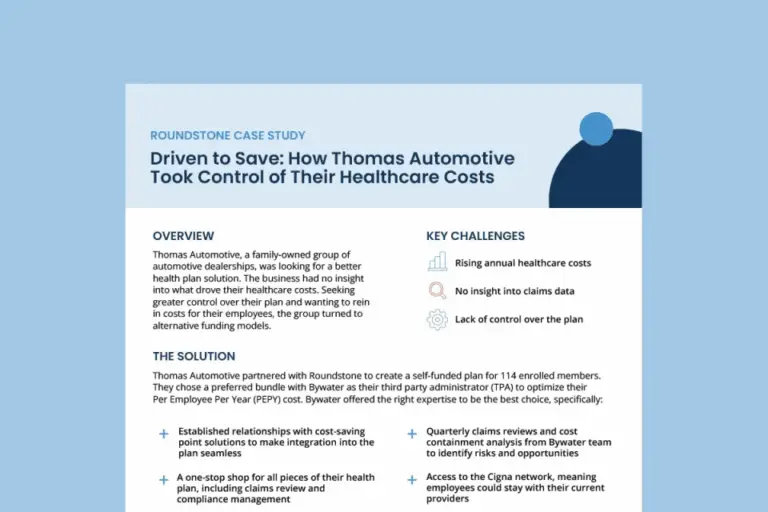
Roundstone Case Study Driven to Save: How Thomas Automotive Took Control of Their Healthcare Costs
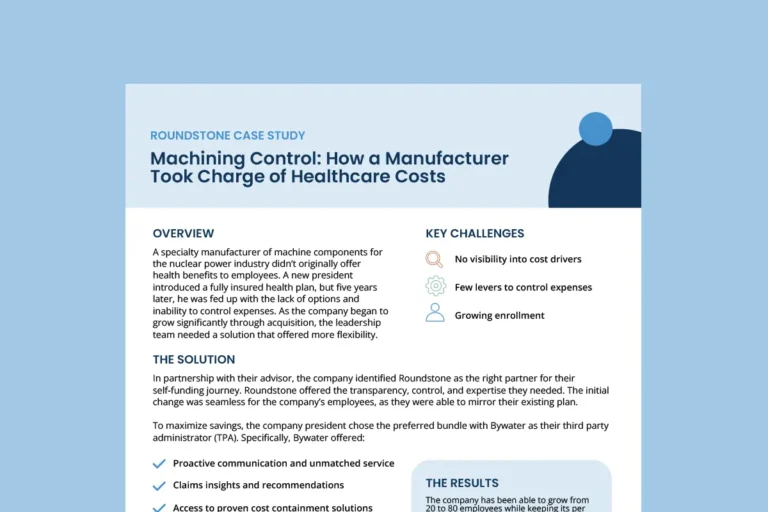
Roundstone Case Study Machining Control: How a Manufacturer Took Charge of Healthcare Costs Healthcare costs
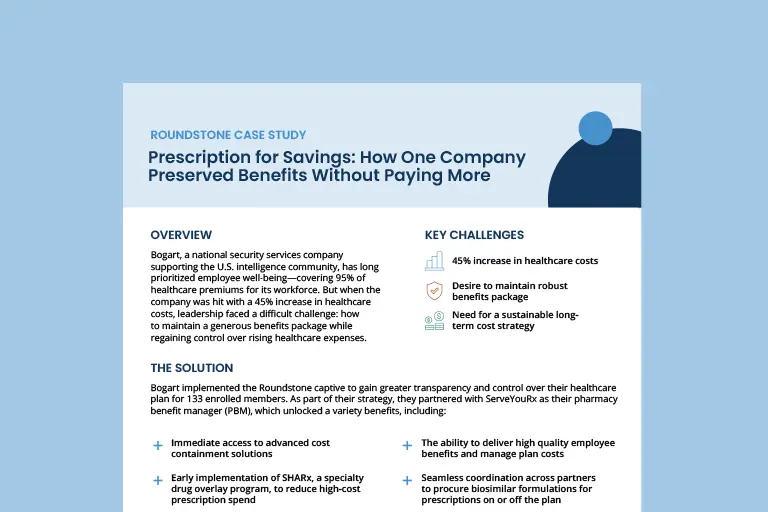
Roundstone Case Study Prescription for Savings: How One Company Preserved Benefits Without Paying More Greater


Read Our E-book An Essential Guide to Health Insurance Captives for Benefits Advisors As healthcare
Read Our E-book The CFO’s Guide to Managing Escalating Healthcare Costs The more healthcare costs

Read Our E-book Essential Guide to Self-Funding for HR Executives Self-funding doesn’t have to be complicated. Get