
News

Introducing Roundstones Association Health Plan
Roundstone’s Association Health Plan brings group purchasing power and self-funded structure to small employers who can’t access captives on their own.

Roundstone’s Association Health Plan brings group purchasing power and self-funded structure to small employers who can’t access captives on their own.

Watching cost containment matters more than ever. Here’s how the flexibility of a self-funded plan delivers dramatic savings without compromising benefits.

Roundstone Insurance makes your transition to self-funded health insurance savings uncomplicated through a guided onboarding process and aligned partners.

Roundstone makes the transition to self-funded health insurance straightforward with a guided onboarding process, partner introductions, and claims setup.

The new normal in employer healthcare blends telehealth, remote work, and rising claims volatility. Self-funded plans adapt faster than fully insured ones.

Telemedicine services have gained massive popularity for their convenience and safety. Here’s how to screen a telemedicine provider that fits your self-funded plan.

Captive insurance and self-funded insurance overlap but are not the same. Here’s how a group medical captive complements a self-funded

Employer health benefits are the second-largest line item after payroll. Self-funding gives you the visibility and levers to manage that

Group medical captives pool risk across like-sized employers, returning unused premium and protecting against volatility while controlling long-term healthcare spend.

Self-funded health plans succeed when employers combine claims data, clinical care management, and aligned partners. Here’s what success looks like

Turnkey health insurance gives small and mid-size employers a simplified path to self-funding with built-in cost containment and stop-loss protection.
Self-insured plans give employers control over claims, vendors, and spend. Fully insured plans hide the data. Here’s how the two

Provider network choice shapes employee care, plan costs, and out-of-pocket spend. Here’s how self-funded employers pick the right one.

Pharmacy costs are rising faster than any line item in your health plan. Here’s how to choose a PBM that

Per-employee-per-year (PEPY) cost is the truest benchmark for whether your health plan is competitive. Here’s how to use it to

Your pharmacy benefit manager makes or breaks drug spend. Here’s how self-funded employers choose a PBM aligned with their interests,

A third-party administrator (TPA) is the backbone of any self-funded plan. Here’s how a TPA processes claims, manages eligibility, and

Finding the right TPA shapes claims accuracy, employee experience, and total spend. Here are 8 secrets self-funded employers use to

You don’t always get what you pay for in healthcare. Bob Chrobak shows how higher cost doesn’t always mean better

Roundstone’s Cost Savings Investigators (CSI) team digs into claims data to find waste, billing errors, and overcharges. Real dollars stay

Late-stage cancer diagnoses are among the most expensive claims employers face. Here’s how early detection and plan design lower the

High-cost specialty drugs are reshaping employer pharmacy spend. Here are the ways self-funded employers save without restricting clinical access for

If renewal season has you bracing for a double-digit increase, it’s time to look at self-funding. Here’s how the model

Renewal season is the moment benefit advisors prove their value. Here’s how to prepare with claims data, scenario modeling, and

Strategic incentives, education, and communication can increase wellness program engagement by 40-60%. Here’s how self-funded employers design programs that actually

Employee healthcare is the largest controllable line item on most P&Ls. Self-funded plans give you the data to manage spend

The best health insurance for employees isn’t always the lowest sticker price. Self-funding aligns cost, coverage, and care for long-term

Culturally competent healthcare improves outcomes and reduces preventable claims. Self-funded employers can choose vendors and programs that actually serve their

Five recommended reads on workplace wellness, from behavioral health to chronic disease management, for HR leaders building healthier, more engaged
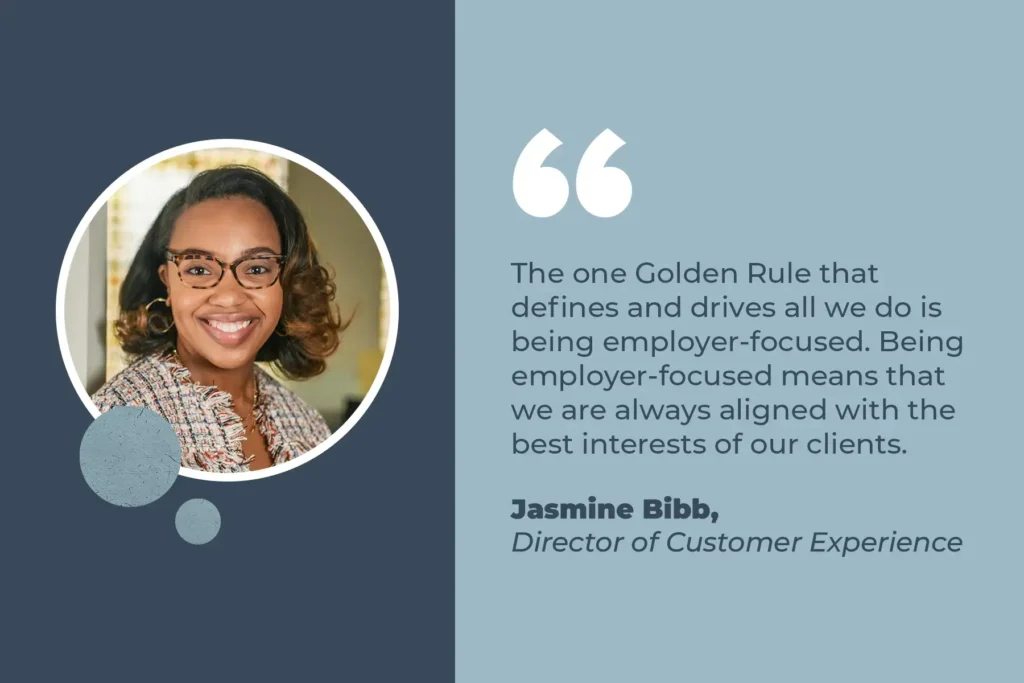
Customer experience at Roundstone is anchored in responsive service, proactive claims navigation, and the team that supports employers through every