
Choosing a third-party administrator (TPA) is one of the most important decisions to make when building a self-funded health plan. Most employers learn this after a year of claims errors, unanswered member calls, and a renewal conversation full of surprises. You don’t have to get there to know what to look for.
These 10 criteria give you a framework for evaluating any TPA before you commit to one.

1. Confirm They Specialize in Your Company Size
Larger TPAs design their processes, staffing models, and technology around large employer needs. A company with 150 employees doesn’t require the same infrastructure as one with 5,000. In addition, a TPA built for enterprise clients may not serve midsize employers as well.
The attention you receive, the service team’s responsiveness, and the relevance of their reporting may be a reflection of your company size compared to their book of business.
Ask prospective TPAs directly: What is your average group size? Where does our company fall within your client roster? If you’re near the bottom, that’s worth knowing before you sign.

2. Evaluate Network Access and Reporting Depth
A TPA’s network determines which providers your employees can see. Network reputation, though, isn’t the same as network performance. A recognized carrier name doesn’t guarantee that your employees are getting strong discounts. It also doesn’t mean that the claims data flowing back to your plan is accurate and complete.
Ask for utilization reports and discount data, not marketing materials. Your stop-loss insurance carrier’s perspective on network discount performance is also worth factoring in, since they’re looking at your claims from a different angle.
The integration between your TPA and your network matters as much as the network itself. When these two systems share data, your reporting is more accurate.

3. Ask About Captive-Specific Experience
A TPA with general self-funding knowledge is not the same as one built for group captive. Captive structures need close, ongoing coordination. This main parties involved are the TPA, the stop-loss carrier, and the captive manager. Reporting timelines, large-claim notifications, and renewal data all need to move accurately between parties. A TPA unfamiliar with captives introduces gaps at each of those touchpoints.
The distinction matters most at renewal. In a captive, the TPA’s reporting feeds directly into decisions about the captive pool’s performance, individual group claims, and stop-loss adjustments. A TPA that doesn’t understand how its data is being used can create real problems.

4. Request Transparent, Flat-Fee Pricing
Some TPAs charge a percentage of claim savings or keep a part of pharmacy benefit manager (PBM) rebates. This misaligns incentives and inflates your costs without ever appearing on an invoice.
A TPA that earns more when it finds savings sounds appealing, until you realize that model doesn’t always align with what’s best for your plan.
Before you sign anything, request a flat per-employee-per-month (PEPM) fee and get all charges in writing upfront. Ask if the TPA retains any PBM rebates, claim savings, or out-of-network discount sharing arrangements. The answers will tell you a great deal about the structure of the relationship.

5. Test Claims Management, Not Just Claims Processing
Processing and management are two different things, and the difference is in your plan costs. Processing means routing a claim to payment, while management means more. Active management is scrutinizing that claim for accuracy, catching billing errors, handling subrogation, and coordinating on out-of-network charges. Overall, they’re protecting the employer from overpayment.
Ask how the TPA handles out-of-network billing disputes, balance billing, and inappropriate charges. A TPA that functions as a rubber stamp costs employers real money over time.
When evaluating claims management capability, ask for performance data, not anecdotes. Accuracy rates, processing timelines, and subrogation recovery numbers all indicate how seriously a TPA takes this work.

6. Assess Customer Service Responsiveness
Employees interact with a TPA a lot. The TPA handles every time they ask about a claim, a provider, or their explanation of benefits. A TPA that’s slow to respond, hard to reach, or unclear creates friction that HR teams absorb.
It also erodes employee confidence in the plan, which affects how people perceive their benefits and, by extension, how they perceive their employer.
Ask prospective TPAs for their average call answer time, their escalation process for complex issues, and how they handle member disputes. Find out whether members reach a live person or a call queue. The answers matter more if you’re switching plan design or networks, when employees need more support to navigate changes, not less.

7. Verify the Enrollment Process
Enrollment is the first experience employees have with a new plan. A clumsy onboarding process creates confusion, and the impression is hard to reverse.
If moving from a fully-insured plan, enrollment is also the first impression of self-funding itself. A poor rollout can color how employees feel about the plan for the entire year.
Ask for a walkthrough of the enrollment workflow. Clarify communication timelines, find out when employees can expect ID cards, and understand what support is available during the transition. Ask how the TPA handles late enrollees, dependent changes, and mid-year additions. A well-run enrollment process signals operational maturity across the board.
8. Demand Real-Time Data Access
Your TPA sits on top of your claims data. If that data isn’t accessible, and actionable, you’re managing your most significant cost center without the information you need. Self-funded plans have an advantage over fully-insured coverage: you can see your claims, track your spending, and make adjustments based on what the data shows.
A TPA that can’t surface that information in a usable format gives up that advantage.
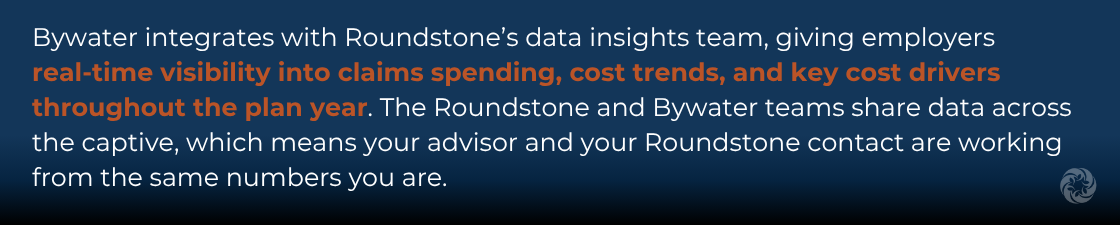
Look for a reporting platform that provides real-time claims data, cost trends by category, utilization patterns, and financial performance against your plan benchmarks. This visibility is what allows employers and advisors to make proactive decisions during the plan year.
9. Look for Captive Reporting and Stop-Loss Coordination
In a group captive, the TPA, stop-loss carrier, and captive manager need to move in alignment. A TPA that doesn’t understand how its reporting affects captive performance, or that can’t coordinate with the stop-loss carrier on large-claim management, creates gaps when precision matters most.
Timing is particularly important: a delayed large-claim notification or an inaccurate run-out report can affect stop-loss reimbursements and captive distributions.
Ask how the TPA communicates with the captive throughout the year and at renewal. Ask how they flag large claims and report to the stop-loss carrier. If the TPA can’t give you a clear, specific answer, that’s a meaningful data point.

10. Look at the Full Cost Picture
A low PEPM can look attractive until you factor in the cost of inaccurate claims adjudication, PBM rebate retention, and an underperforming network. None of those costs appear on a TPA invoice. They show up in your total per-employee-per-year (PEPY) spend, and by the time you see them, you’ve already absorbed them.
Test the TPA in full context. What is the total PEPY cost for groups using this TPA, and how does that compare to industry benchmarks? What does claims accuracy look like, and what is the TPA’s track record on subrogation recovery? How does the network perform on actual discount rates, not just advertised ones? The admin fee is one line in a much larger picture.

Advisors: Learn how to bring cost savings to your clients with self-funding through a group captive.
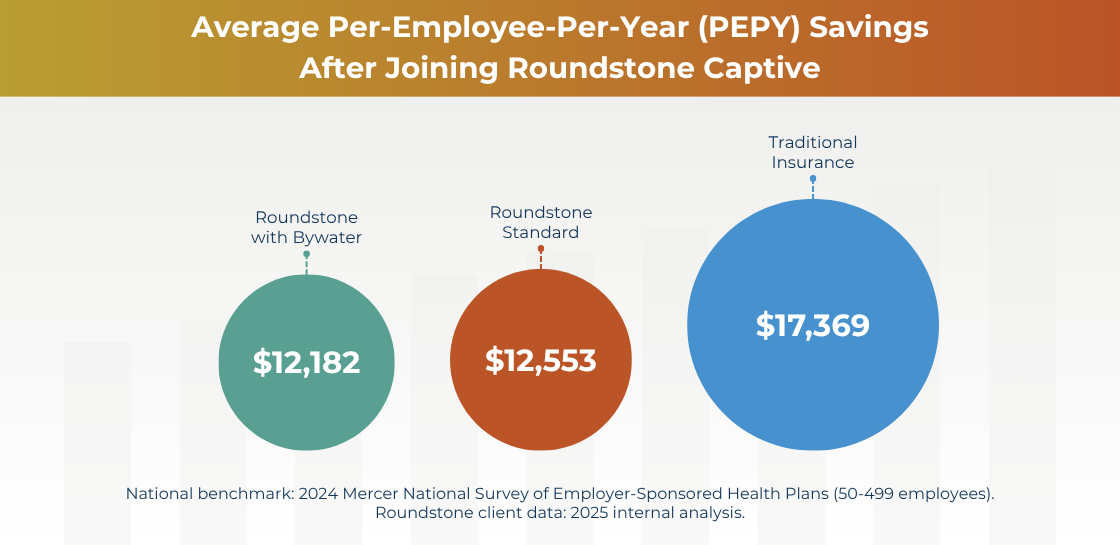
Employers using Bywater as part of Roundstone’s Preferred Bundle average a $12,182 PEPY.
That’s 30% below the industry benchmark of $17,369 for companies with 50 to 499 employees, according to the 2024 Mercer Survey.
The Right TPA Changes the Math
TPA selection isn’t a back-office decision. It affects every claims dollar, every employee interaction, and every renewal conversation. The criteria above aren’t a wish list; they’re the baseline for what a well-run TPA should deliver.
Roundstone gives employers the flexibility to work with most TPAs. However, the performance data shows that employers using Bywater outperforms industry benchmarks.
To see how your current plan stacks up, reach out to a Roundstone rep for a benchmark review and to find out whether the Preferred Bundle is the right fit for your organization.

Frequently Asked Questions About Finding the Right TPA
What is the difference between a TPA and an insurance carrier?
An insurance carrier assumes financial risk and collects premiums. A TPA administers a self-funded plan on behalf of the employer, who bears the financial risk. The TPA handles claims processing, compliance, and member services without underwriting coverage.
What is a PEPM fee?
PEPM stands for per-employee-per-month. It’s the standard fee structure a TPA charges for plan administration.
Can a small business use a TPA for a self-funded health plan?
Yes, self-funded plans with TPA administration are available to companies of all sizes. Find a TPA that specializes in small and midsize groups rather than one built for large employers.
What is the difference between claims processing and claims management?
Claims processing means routing a claim to payment. Claims management reviews each claim, catches billing errors, handles subrogation, and protects the employer from overpayment.
What is subrogation in a self-funded health plan?
Subrogation is the process of recovering claim costs when a third party is responsible for an employee’s medical expenses. A TPA that pursues subrogation recovery returns those dollars to the plan.
Do TPAs keep PBM rebates?
Yes, some do. Certain TPAs keep a portion of pharmacy benefit manager (PBM) rebates or claim savings without disclosing it.
How long does it take to onboard with a new TPA?
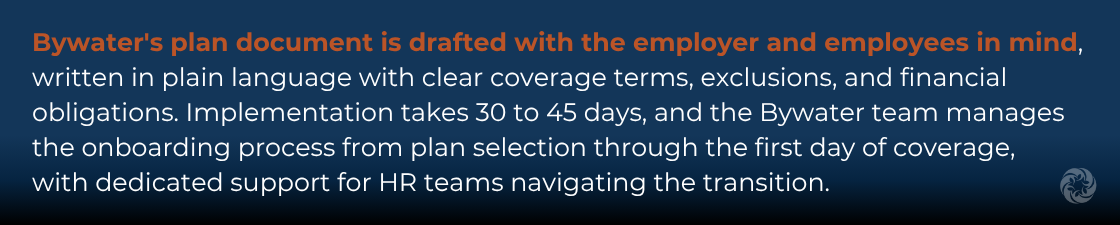
Implementation timelines vary by TPA. A typical onboarding process takes 30 to 45 days. This typically includes a completed plan document, employee communications, and ID card distribution.
What is a Summary Plan Description (SPD)?
An SPD is a document that outlines the benefits, exclusions, and financial obligations of your health plan. Federal law requires employers to provide an SPD to all covered employees.
What compliance requirements does a TPA manage?
A TPA helps manages ERISA requirements, HIPAA privacy standards, ACA mandates, and state regulations. This includes filing Form 5500s, managing COBRA notices, and staying current with regulatory changes.
What questions should I ask a TPA before signing a contract?
Key questions include: What is your average group size? Do you keep any PBM rebates or claim savings? What is your claims accuracy rate and processing timeline? How do you handle out-of-network billing disputes? What does onboarding look like, and what service commitments do you publish?
What is the difference between a TPA and an ASO arrangement?
An ASO, or administrative services only arrangement, describes the structure in which an employer funds claims while outsourcing administration. A TPA is the entity that provides those administrative services.
How does a TPA affect stop-loss insurance?
A TPA’s reporting accuracy affects stop-loss performance. Large-claim notifications, run-out reports, and renewal data all flow from the TPA to the stop-loss carrier. Delays or inaccuracies in that data can affect reimbursements and captive distributions.