
By Scott Miker COO, Head of HR and Underwriting at Roundstone
Navigating health benefits can be challenging for many employees. Some default to the ER when urgent care would serve them just as well at a fraction of the cost. They might stay on an employer plan at age 66 because no one explained Medicare clearly enough for them to trust it.
Or maybe they skip preventive screenings because the last person who tried got an unexpected bill and told everyone about it.
The real problem is trust and clarity, and solving it requires more than a better open enrollment email.
I’ve spent years thinking about what separates employers who get genuine engagement from those who don’t, and the answer almost never comes down to communication alone.
"Engagement isn't just utilization. It's about building enough understanding and trust with employees so that they feel comfortable and confident to take action."
We’ve found five practical ways to increase employee engagement. This blueprint can help your employees get the most from their self-funded benefits, as well as improve your company’s bottom line.

CFOs: Learn more about the cost-savings opportunities when you self-fund through a group captive.
1. Start With a Plan Design That Doesn't Punish Employees for Using It
You can’t communicate your way out of a plan that works against the people enrolled in it.
Consider what happens with a standard colonoscopy benefit. Most plans cover preventive colonoscopies at 100%, but if the physician finds something and the procedure becomes diagnostic, a bill follows.
I’ve seen this play out firsthand: one employee in that situation told everyone in the company the plan was a scam, and screenings fell off as a result. It resulted in missed preventive care, eroded trust, and potentially far more expensive claims down the road.
The situation was entirely avoidable. Self-funded employers can write their plans to cover colonoscopies at 100% regardless of what the physician finds. That one change removes the financial fear that keeps employees from getting screened.
Bywater, Roundstone’s in-house third-party administrator, builds plan documents with the employer and employee in mind rather than around the network’s contract language. When the plan design works for employees, engagement follows without the hard sell.

2. Use Your Claims Data to Communicate Selectively
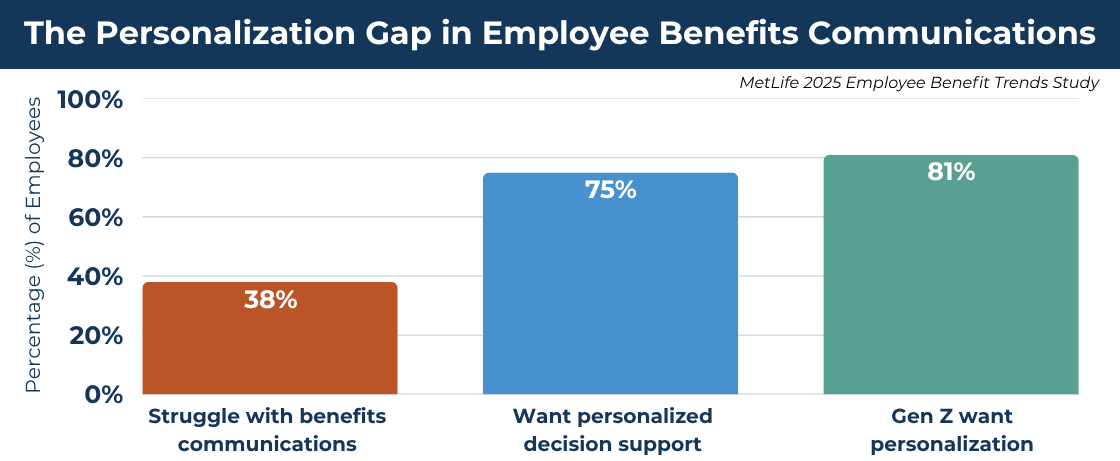
Over-communicating to the wrong people is the most common engagement failure in employer health plans. Sending the same message to every employee regardless of their situation is how you train people to tune you out.
The goal is the right message to the right people.
Self-funded employers have the claims data to achieve this. If your data shows elevated emergency room use, that’s your signal to communicate urgent care alternatives to that specific population, not the whole company.
If a meaningful portion of your workforce is approaching Medicare eligibility, that’s a separate, targeted conversation with an entirely different set of stakes.
Claims transparency is what makes this possible. When you can see exactly what your population is using and where costs are concentrating, you stop guessing about who needs what. Relevance is what prompts action, and employees recognize when a message applies to their actual situation.
3. Choose Vendor Partners Who Work in the Employee's Interest
Plan design and data give you a strategy. The vendor partners you bring in determine whether that strategy reaches anyone.
When you’re fully insured, the carrier decides who sits at the table. When you self-fund through a group medical captive, you do. I think about it like a toolbox. When you’re fully insured, there’s a lock on it and there’s nothing you can do. When you join a group captive, especially with Bywater managing the plan, you get the key.
All those cost-containment tools for making the plan work better for your employees and your company become available to you.
Navigation services, benefit advocacy partners, and specialty pharmacy vendors provide the kind of personalized support HR teams can’t replicate at scale. They also report their own utilization data back to the employer, so you can see whether the investment is working rather than taking it on faith.
| Feature | Self-funded Group Captive | Fully Insured |
|---|---|---|
|
Plan design control |
Fully customizable |
Carrier-controlled |
|
Vendor selection |
Employer chooses |
Carrier assigns |
|
Claims transparency |
Full data access |
Limited to none |
|
Unused premium |
Returned to employer |
Kept by carrier |
|
Targeted employee communications |
Claims-data driven |
One-size messaging |
|
Cost containment vendors |
Employer selects |
Not available |
4. Give Employees Someone to Call When Things Get Complicated
HR generalists know the plan well, but an employee facing a serious diagnosis or a major life transition needs more than plan documents.
A 66-year-old trying to decide whether to stay on the employer plan or transition to Medicare doesn’t need a summary plan description. They need someone who can walk through the options with them, explain what each one costs in their specific situation, and help them make a confident decision.
Without that guidance, they stay on the plan by default, often at higher cost to both parties. I’ve watched it happen repeatedly, and it’s one of the more fixable problems in self-funded health insurance.

HR Managers: Learn how Roundstone supports plan administration with our free download.
Benefit advocacy services like FEDLogic, a Roundstone Tier 2 cost containment partner, specialize in exactly these moments, events like Medicare transitions, catastrophic diagnoses, premature births, and Social Security navigation.
They reach employees through surveys and targeted outreach rather than blanket messaging, connecting with people around the situations that are actually relevant to them. According to FEDLogic’s own data, roughly one-third of supported families transition to more cost-effective options, with a return on investment approaching 7-to-1.
REAL-WORLD EXAMPLE
Families who transition to more cost-effective options
1 in 3
Average return on investment for supported members
~7:1
When employees facing complex situations receive personalized benefit advocacy support.
5. Measure Behavior Change, Not Awareness
Most engagement measurement stops at awareness: how many people opened the email or showed up to the benefits fair. That’s not a useful number on its own.
"Engagement equals behavior change, not awareness. Behavior change happens when communication is relevant, education is available, and trust is established."
Good vendor partners report the metrics that actually tell that story: consultations completed, topics addressed, and claims redirected. If a navigation service can show you how many employees avoided unnecessary specialist visits, that’s a number you can bring into the plan renewal conversation with confidence.
Employers still running a stack of fully insured quotes every year, looking for the lowest number, aren’t getting any of this data. They end up solving for the wrong problem.
The Real Starting Point
If your employees aren’t using the plan you built for them, start with the plan itself. Self-funded health insurance gives you control over the three things that make everything else in this list possible: plan design, vendor selection, and your own claims data.
The Roundstone group medical captive gives employers with 25 to 1,000 employees access to the same stop-loss structure and cost containment tools that large, sophisticated plan sponsors have used for years, with the healthcare cost savings to show for it.

Advisors: Learn more about self-funding through a group captive with Roundstone.
Roundstone Supports You All the Way
When you self-fund through a group captive with Roundstone, we offer full support to employers, advisors, and HR managers, from initial conversation through plan renewal. We’ll help you identify cost-savings opportunities and give you the data you need to make those decisions.
Contact Roundstone today to start the conversation.

FAQ
What does employee benefits engagement mean?
It means employees understand the plan well enough to act on it with confidence. Enrollment is not the same as engagement. The difference shows up in whether someone schedules a preventive screening, chooses urgent care over the ER, or knows who to call when something serious happens.
Why don't employees use their health benefits?
Usually because the plan feels risky or confusing. If an employee once got an unexpected bill after a routine procedure, they tell people. Fear of cost and lack of relevant communication are the two most consistent barriers.
What is the difference between benefits utilization and benefits engagement?
Utilization tells you whether the plan was used. Engagement tells you whether it was used well. An employee who drives to the ER for something urgent care handles is utilizing the plan and costing the employer significantly more than necessary.
How does self-funded health insurance improve employee engagement?
It gives employers the data and flexibility that fully insured plans don’t. When you can see what your population is actually using, you can communicate in ways that are relevant. When you control plan design, you can remove the cost friction that keeps employees from seeking care.
What role does plan design play in benefits engagement?
More than most employers realize. Consider the colonoscopy example: most standard plans cover a preventive colonoscopy at 100%, but if the physician finds something, a bill follows. One employee in that situation tells the whole company. Fixing that in the plan document costs nothing and rebuilds trust faster than any communication campaign.
How can employers use claims data to improve benefits communication?
It tells you who needs what. High ER utilization points to an urgent care education opportunity with that specific group, not a company-wide announcement.
What is a benefit advocacy service and when does an employee need one?
It’s expert guidance for situations HR can’t fully navigate: Medicare transitions, catastrophic diagnoses, premature births, disability determinations. Employees in these situations need someone who knows the federal and state benefit landscape and can walk them through it personally.
How do you measure employee benefits engagement?
Track what actually changed. Vendor utilization rates, consultations completed, claims redirected to lower-cost care, and ROI from cost containment partners tell a more complete story than open rates or benefits fair attendance.
Can a small or midsize employer improve benefits engagement?
Yes, and the group captive model is specifically built for that. Employers with 25 to 1,000 employees can access the same data transparency, plan design flexibility, and cost-containment vendor relationships that large self-funded plan sponsors have used for years.
What is a group medical captive?
A group medical captive is a self-funded structure where employers pool together to share risk, access stop-loss protection, and return unused premiums at year end. Members gain full visibility into their claims data and control over plan design.
Those two things are what make a meaningful engagement strategy possible. You can’t target communication you can’t see, and you can’t fix a plan you don’t control.