Roundstone Recognized As A Winner Of The 2024 Northeast Ohio Top Workplaces Award
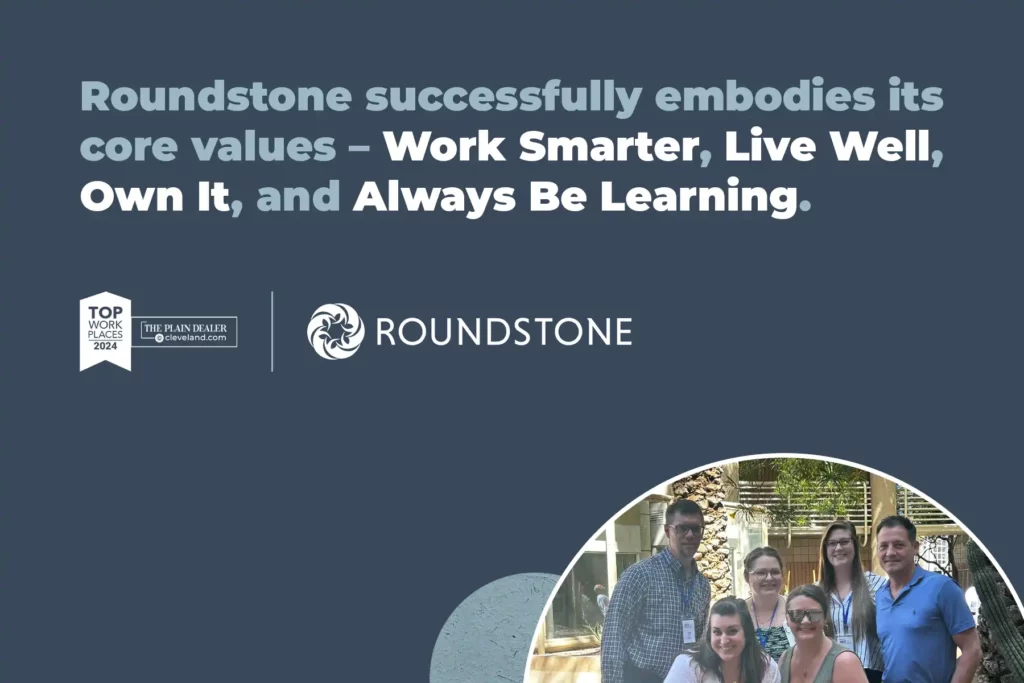
Roundstone won a 2024 Northeast Ohio Top Workplaces Award, recognized for employee experience, culture, and how the team supports captive members.
Explore our blog resources to help employers and advisors understand the value of captive insurance.

Roundstone won a 2024 Northeast Ohio Top Workplaces Award, recognized for employee experience, culture, and how the team supports captive members.

The best health insurance for employees isn’t always the lowest sticker price. Self-funding aligns cost, coverage, and care for long-term workforce health.

Small business health insurance doesn’t have to mean fixed plans and surprise renewals. Group captive self-funding makes the model accessible at smaller workforce sizes.

Customer success in a self-funded plan means proactive claims management, employee navigation, and quarterly business reviews that turn data into real action.

Mental health is the fastest-growing claims category for most employers. Self-funded plans give you the visibility to address behavioral health spend strategically.

Behavioral and mental health costs are climbing fast. Here’s how self-insured employers use plan design and clinical care to control the spend.

Roundstone’s top ten 2023 resources on self-funded health insurance, covering renewals, stop loss, captives, employee experience, and pharmacy strategy.

Self-funded health plans pay off when employers commit to a long-term view, riding through short-term claims volatility to capture compounding

Finding the best stop loss captive for your employee health plan comes down to underwriting, claims transparency, surplus return, and

Insights from self-funded employers on what works: claims transparency, vendor flexibility, and clinical care management that actually moves the cost

Keeping premiums affordable starts with claims transparency and ends with structural cost containment. Self-funded plans are built for both.

Self-funded insurance lowers cost by giving employers claims transparency, vendor flexibility, and the ability to act directly on data instead
Self-funding means an employer pays for their employees’ healthcare claims directly instead of paying fixed premiums to an insurance carrier.
A medical group captive is a self-funded model where small and mid-sized employers join together to access financial advantages, share risk and gain greater stability.
Stop-loss insurance protects self-funded employers from large or unexpected claims. It caps financial risk so one high-cost event doesn’t significantly impact your overall healthcare spend.
Health insurance costs rise due to increasing healthcare prices, higher utilization, and lack of transparency in traditional models. Learn how self- funding through a captive can help offset these trends.
Cost containment includes strategies that reduce unnecessary healthcare spending while maintaining quality care. Read how tactics like claims analysis, preventative care, and pharmacy cost management can reduce spend.
Join us live or watch pre-recorded discussions, expert panels, and educational sessions designed for employers and advisors.
Hear candid conversations and real-world insights from industry experts shaping the future of healthcare funding.
Explore in-depth guides covering captive insurance, healthcare costs, and strategies for long-term savings.
Stay informed with monthly insights on captive insurance, cost control, and smarter benefit strategies.
"*" indicates required fields