Funding Basics

Disadvantages Of Level Funding
Level funding looks like self-funding from a distance but lacks claims transparency, vendor flexibility, and surplus return. Here are ten reasons to avoid it.

Level funding looks like self-funding from a distance but lacks claims transparency, vendor flexibility, and surplus return. Here are ten reasons to avoid it.
Roundstone distributed $12.4 million back to group captive participants, returning unused premium directly to employers in line with the captive’s risk-sharing model.

Prescription drug prices are the fastest-growing cost in employer benefits. Self-funded plans give you the visibility and tools to bend the curve.

Group captives let employers share risk, return unused premium, and gain claims transparency. Here’s how that structure translates into real cost savings.

Group captive insurance was built as a structural alternative to fully insured health plans. Here’s how it gives mid-market employers real cost control.
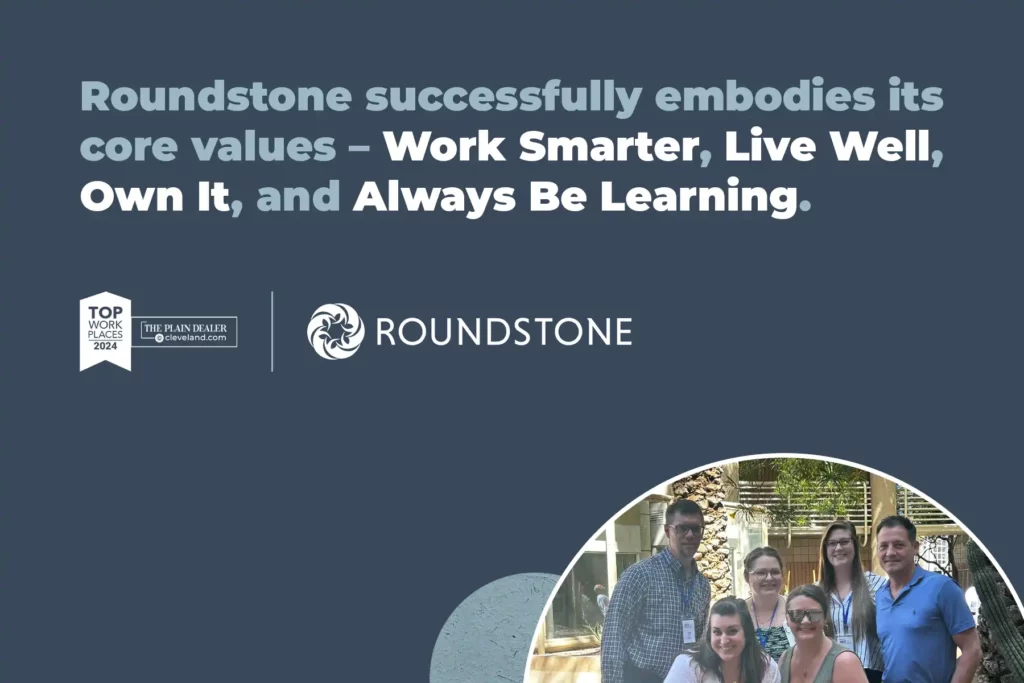
Roundstone won a 2024 Northeast Ohio Top Workplaces Award, recognized for employee experience, culture, and how the team supports captive members.

Stop-loss insurance protects self-funded employers from catastrophic claims by pooling risk with similarly sized businesses through a group captive plan.

Twenty percent of employees drive eighty percent of healthcare costs. Self-funded plans give you the data to manage chronic conditions

Self-funded health insurance lets employers pay claims directly, capture savings when employees stay healthy, and see exactly where every dollar

Specialty drugs are the fastest-growing line item in employee benefits. A self-funded plan gives you the visibility and levers to

Budgeting a self-funded health plan means understanding fixed and variable costs. Here’s how to plan spend and unlock savings through

A group captive lets like-sized employers pool risk, share data, and capture savings together. It’s the structural alternative to fully

Provider network choice shapes employee care, plan costs, and out-of-pocket spend. Here’s how self-funded employers pick the right one.

Pharmacy costs are rising faster than any line item in your health plan. Here’s how to choose a PBM that

Per-employee-per-year (PEPY) cost is the truest benchmark for whether your health plan is competitive. Here’s how to use it to

Your pharmacy benefit manager makes or breaks drug spend. Here’s how self-funded employers choose a PBM aligned with their interests,

A third-party administrator (TPA) is the backbone of any self-funded plan. Here’s how a TPA processes claims, manages eligibility, and

Finding the right TPA shapes claims accuracy, employee experience, and total spend. Here are 8 secrets self-funded employers use to

Wellness programs deliver measurable ROI through reduced claims, lower absenteeism, and stronger productivity. See how self-funded employers track and prove

For most CFOs, healthcare costs now eat directly into profitability. This Roundstone leadership study shows where the spend goes and

Healthcare cost containment finds waste, removes it, and keeps outcomes intact. Self-funded plans give you the claims data to do

Self-funding gives you the control, claims visibility, and flexibility to attack the cost drivers that fully insured plans actively hide

Effective cost containment starts with claims data, clinical care management, pharmacy optimization, and direct primary care partnerships working as one

Real healthcare cost savings come from claims transparency, smart vendor choices, and proactive clinical management. Self-funding makes all three possible.

If renewal season has you bracing for a double-digit increase, it’s time to look at self-funding. Here’s how the model

Renewal season is the moment benefit advisors prove their value. Here’s how to prepare with claims data, scenario modeling, and

Introducing self-funded health insurance to employees is mostly about communication. Here’s how to explain the model, the value, and what

Well-being programs improve employee health while reducing benefit cost. Here’s how strategic incentives drive participation and engagement that actually sticks.

It’s hiring season. Top talent expects benefits that show employers actually invested in employee health. Here’s how self-funding helps you

Cultivating a culture of healthcare consumerism takes employee education, transparent tools, and steady communication. Here’s how to engage your team.

Employers can use wellness programs to improve employee health while controlling cost. Here’s how to launch a well-being program that