Telehealth Coverage Inspires Trust In Health Insurance Plans
Telehealth coverage inspires trust because it removes friction from accessing care. Self-funded plans can prioritize and price telehealth on their own terms.
Explore our blog resources to help employers and advisors understand the value of captive insurance.

Telehealth coverage inspires trust because it removes friction from accessing care. Self-funded plans can prioritize and price telehealth on their own terms.

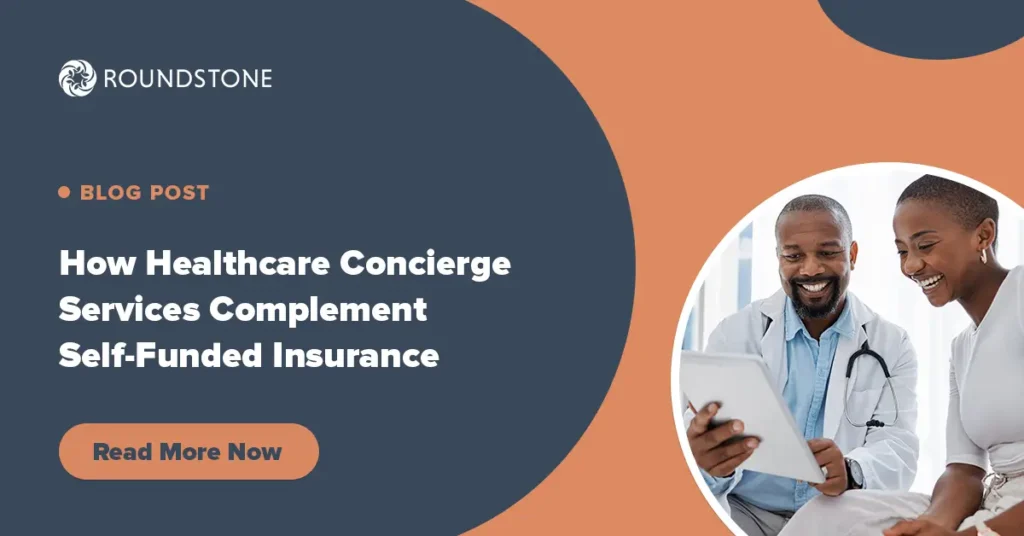
The essential guide to self-funding HR executives have been asking for, covering plan design, partners, employee communication, and what changes year one.

Healthcare concierge services help employees navigate care, reducing claims spend while improving the employee experience inside any self-funded health plan.

Sexual and reproductive health care access and education matter for employee outcomes and employer cost. Here’s how self-funded plans can support both.

Aligning incentives between employer, employees, and providers is the foundation of a healthier, cost-effective benefits plan. Here’s how to design that alignment.

Roundstone recognizes the best benefits advisors in the business, advisors who lead with self-funded captive solutions and consistently win for their clients.

Group captive insurance was built as a structural alternative to fully insured health plans. Here’s how it gives mid-market employers

Small business health insurance doesn’t have to mean fixed plans and surprise renewals. Group captive self-funding makes the model accessible

Customer success in a self-funded plan means proactive claims management, employee navigation, and quarterly business reviews that turn data into

Mental health is the fastest-growing claims category for most employers. Self-funded plans give you the visibility to address behavioral health

Behavioral and mental health costs are climbing fast. Here’s how self-insured employers use plan design and clinical care to control

Why self-funding? Claims transparency, vendor flexibility, surplus return, and structural protection against the volatility that fully insured plans actively hide.

Provider network choice shapes employee care, plan costs, and out-of-pocket spend. Here’s how self-funded employers pick the right one.

Pharmacy costs are rising faster than any line item in your health plan. Here’s how to choose a PBM that

Per-employee-per-year (PEPY) cost is the truest benchmark for whether your health plan is competitive. Here’s how to use it to

Your pharmacy benefit manager makes or breaks drug spend. Here’s how self-funded employers choose a PBM aligned with their interests,

A third-party administrator (TPA) is the backbone of any self-funded plan. Here’s how a TPA processes claims, manages eligibility, and

Finding the right TPA shapes claims accuracy, employee experience, and total spend. Here are 8 secrets self-funded employers use to

Wellness programs deliver measurable ROI through reduced claims, lower absenteeism, and stronger productivity. See how self-funded employers track and prove

For most CFOs, healthcare costs now eat directly into profitability. This Roundstone leadership study shows where the spend goes and

Healthcare cost containment finds waste, removes it, and keeps outcomes intact. Self-funded plans give you the claims data to do

Self-funding gives you the control, claims visibility, and flexibility to attack the cost drivers that fully insured plans actively hide

Effective cost containment starts with claims data, clinical care management, pharmacy optimization, and direct primary care partnerships working as one

Real healthcare cost savings come from claims transparency, smart vendor choices, and proactive clinical management. Self-funding makes all three possible.

If renewal season has you bracing for a double-digit increase, it’s time to look at self-funding. Here’s how the model

Renewal season is the moment benefit advisors prove their value. Here’s how to prepare with claims data, scenario modeling, and

Sexual and reproductive health care access and education matter for employee outcomes and employer cost. Here’s how self-funded plans can

The Great Resignation reshaped what employees expect from their benefits. Here’s how employers should adapt plan design, communication, and total

Employee wellness program trends are shifting toward chronic disease management, behavioral health, and digital tools. Here’s what works inside self-funded

An employee benefits package is more than premium and deductible. Self-funded plans let you design the package around what your

Employee benefits education is the highest-leverage way to encourage self-advocacy and lower total plan spend. Here’s what to teach and
The pandemic permanently shifted employee health insurance expectations. Self-funded plans have adapted faster than fully insured ones to telehealth and
Self-funding means an employer pays for their employees’ healthcare claims directly instead of paying fixed premiums to an insurance carrier.
A medical group captive is a self-funded model where small and mid-sized employers join together to access financial advantages, share risk and gain greater stability.
Stop-loss insurance protects self-funded employers from large or unexpected claims. It caps financial risk so one high-cost event doesn’t significantly impact your overall healthcare spend.
Health insurance costs rise due to increasing healthcare prices, higher utilization, and lack of transparency in traditional models. Learn how self- funding through a captive can help offset these trends.
Cost containment includes strategies that reduce unnecessary healthcare spending while maintaining quality care. Read how tactics like claims analysis, preventative care, and pharmacy cost management can reduce spend.
Join us live or watch pre-recorded discussions, expert panels, and educational sessions designed for employers and advisors.
Hear candid conversations and real-world insights from industry experts shaping the future of healthcare funding.
Explore in-depth guides covering captive insurance, healthcare costs, and strategies for long-term savings.
Stay informed with monthly insights on captive insurance, cost control, and smarter benefit strategies.