Funding Basics

Self Funded Employee Satisfaction
Self-insurance and employee satisfaction reinforce each other. Lower out-of-pocket costs, better access, and benefits employees actually value drive long-term retention.

Self-insurance and employee satisfaction reinforce each other. Lower out-of-pocket costs, better access, and benefits employees actually value drive long-term retention.
Onboarding a self-funded health plan is more straightforward than employers expect. Here’s the timeline, the partners, and what HR needs to prepare.
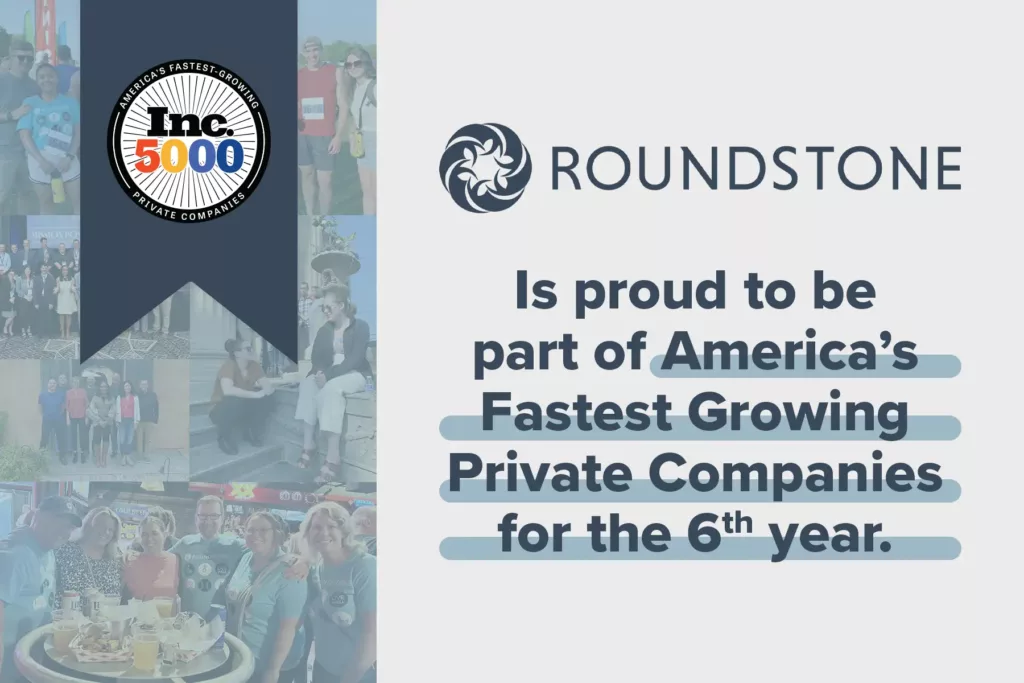
Roundstone made the Inc 5000 list of fastest-growing private companies for the sixth consecutive year, reflecting sustained growth in the group captive program.

Five recommended reads on workplace wellness, from behavioral health to chronic disease management, for HR leaders building healthier, more engaged teams.

A self-funded health plan lets employers pay claims directly, gain claims visibility, and capture savings when employees stay healthy. Here’s how it works.

Selecting the right benefits advisor shapes the success of your self-funded plan. Here are ten criteria mid-market employers should use to evaluate candidates.

A group captive self-funded plan lets you customize coverage, contracts, and vendors. Here’s how to design yours to cut costs

Direct primary care gives employees unlimited access to a primary doctor for a flat fee, cutting ER visits and lowering

With Roundstone’s self-funded health insurance, you’re not shopping a fixed product. You’re designing a plan around your workforce, claims data,

Higher deductibles shift cost to employees and often backfire on engagement and retention. Self-funding offers a smarter path to controlling

GLP-1 medications are reshaping employer drug spend. Here’s what self-funded employers should know about coverage, eligibility, and managing the cost

More employers are choosing self-funded insurance to take control of healthcare spend. A group captive makes the model accessible even

Provider network choice shapes employee care, plan costs, and out-of-pocket spend. Here’s how self-funded employers pick the right one.

Pharmacy costs are rising faster than any line item in your health plan. Here’s how to choose a PBM that

Per-employee-per-year (PEPY) cost is the truest benchmark for whether your health plan is competitive. Here’s how to use it to

Your pharmacy benefit manager makes or breaks drug spend. Here’s how self-funded employers choose a PBM aligned with their interests,

A third-party administrator (TPA) is the backbone of any self-funded plan. Here’s how a TPA processes claims, manages eligibility, and

Finding the right TPA shapes claims accuracy, employee experience, and total spend. Here are 8 secrets self-funded employers use to

Wellness programs deliver measurable ROI through reduced claims, lower absenteeism, and stronger productivity. See how self-funded employers track and prove

For most CFOs, healthcare costs now eat directly into profitability. This Roundstone leadership study shows where the spend goes and

Healthcare cost containment finds waste, removes it, and keeps outcomes intact. Self-funded plans give you the claims data to do

Self-funding gives you the control, claims visibility, and flexibility to attack the cost drivers that fully insured plans actively hide

Effective cost containment starts with claims data, clinical care management, pharmacy optimization, and direct primary care partnerships working as one

Real healthcare cost savings come from claims transparency, smart vendor choices, and proactive clinical management. Self-funding makes all three possible.

If renewal season has you bracing for a double-digit increase, it’s time to look at self-funding. Here’s how the model

Renewal season is the moment benefit advisors prove their value. Here’s how to prepare with claims data, scenario modeling, and

Sexual and reproductive health care access and education matter for employee outcomes and employer cost. Here’s how self-funded plans can

The Great Resignation reshaped what employees expect from their benefits. Here’s how employers should adapt plan design, communication, and total

Employee wellness program trends are shifting toward chronic disease management, behavioral health, and digital tools. Here’s what works inside self-funded

An employee benefits package is more than premium and deductible. Self-funded plans let you design the package around what your

Employee benefits education is the highest-leverage way to encourage self-advocacy and lower total plan spend. Here’s what to teach and

The pandemic permanently shifted employee health insurance expectations. Self-funded plans have adapted faster than fully insured ones to telehealth and