Data & Performance

Use Data Insights To Cut Employee Benefit Costs
Rising employee benefit costs threaten your bottom line. Measuring claims and healthcare data shows where your highest spend lives and how to mitigate it.

Rising employee benefit costs threaten your bottom line. Measuring claims and healthcare data shows where your highest spend lives and how to mitigate it.

Only 29% of members would recommend their health insurance carrier. Self-funded plans flip the script with claims transparency and aligned partner incentives.

Is self-funded health insurance right for your business? Use this guide to evaluate workforce size, claims experience, and risk tolerance before making the switch.
Roundstone distributed $10.5 million back to its captive participants, returning unused premium directly to employers in line with the program’s structure.

Lowering cost sharing in your health plan can reduce overall employee healthcare costs while improving access to higher-quality care. Here’s how it works.
Roundstone made the Inc 5000 list of fastest-growing private companies for a fifth consecutive year, reflecting sustained growth in the group captive program.

Group captive health insurance plans give mid-market companies a structural way to control healthcare cost while sharing risk with similarly

From the desk of Mike Schroeder, Roundstone founder, February 2019: notes on the captive program, advisor partnerships, and trends in

Four practical ways companies can lower their health benefit spend in the new year, from claims audits to vendor reviews

To maximize the value of Roundstone’s medical stop loss captive, we provide employers with an integrated analytics platform for true

Reference-based pricing (RBP) only works with employee education and full claims transparency. Here’s how to set up both before rolling

Roundstone’s 2018 Medical Captive Forum brought together employers and advisors for two days of education, peer learning, and self-funded health

Provider network choice shapes employee care, plan costs, and out-of-pocket spend. Here’s how self-funded employers pick the right one.

Pharmacy costs are rising faster than any line item in your health plan. Here’s how to choose a PBM that

Per-employee-per-year (PEPY) cost is the truest benchmark for whether your health plan is competitive. Here’s how to use it to

Your pharmacy benefit manager makes or breaks drug spend. Here’s how self-funded employers choose a PBM aligned with their interests,

A third-party administrator (TPA) is the backbone of any self-funded plan. Here’s how a TPA processes claims, manages eligibility, and

Finding the right TPA shapes claims accuracy, employee experience, and total spend. Here are 8 secrets self-funded employers use to
Rising employee benefit costs threaten your bottom line. Measuring claims and healthcare data shows where your highest spend lives and
Lowering cost sharing in your health plan can reduce overall employee healthcare costs while improving access to higher-quality care. Here’s

Clinical care management lowers healthcare costs by guiding employees through complex care, catching issues early, and steering them to higher-quality

Catastrophic diagnoses can blow up a self-funded plan budget. Here are cost containment strategies, from centers of excellence to case

Managing health insurance costs takes more than annual renewals. Self-funded employers use claims data, vendor strategy, and care management every

Captives do it better on data transparency. Members get full claims visibility, not the aggregated, sanitized data fully insured carriers

If renewal season has you bracing for a double-digit increase, it’s time to look at self-funding. Here’s how the model

Renewal season is the moment benefit advisors prove their value. Here’s how to prepare with claims data, scenario modeling, and

Strategic incentives, education, and communication can increase wellness program engagement by 40-60%. Here’s how self-funded employers design programs that actually

Employee healthcare is the largest controllable line item on most P&Ls. Self-funded plans give you the data to manage spend

The best health insurance for employees isn’t always the lowest sticker price. Self-funding aligns cost, coverage, and care for long-term

Culturally competent healthcare improves outcomes and reduces preventable claims. Self-funded employers can choose vendors and programs that actually serve their

Five recommended reads on workplace wellness, from behavioral health to chronic disease management, for HR leaders building healthier, more engaged
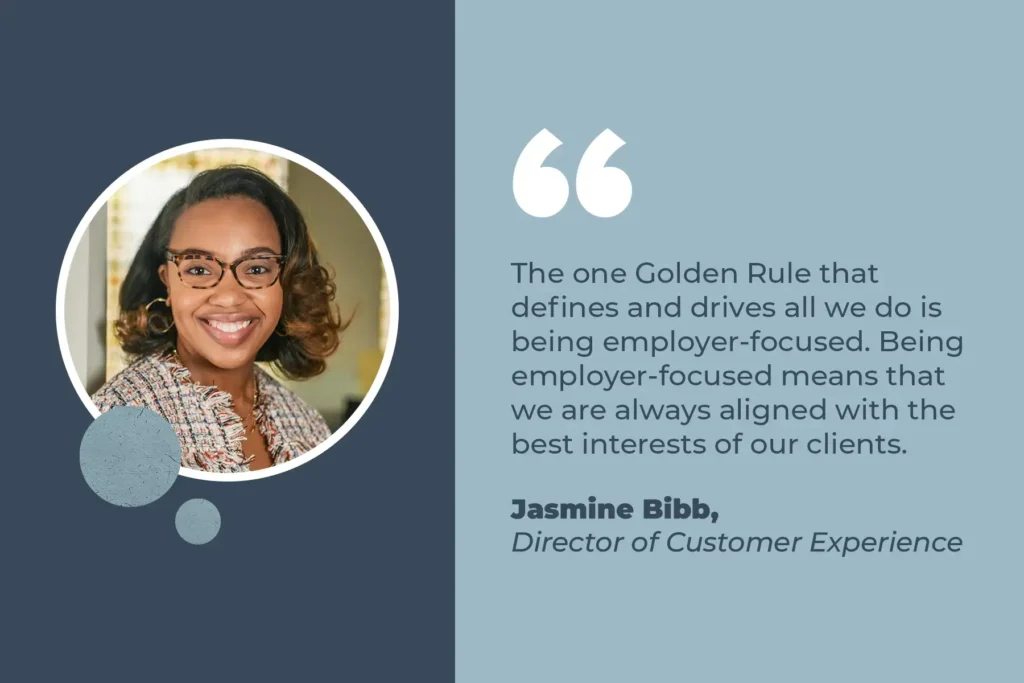
Customer experience at Roundstone is anchored in responsive service, proactive claims navigation, and the team that supports employers through every